Instituto Central de Cidanania
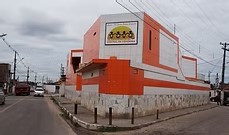
The INSTITUTO CENTRAL DE CIDADANIA or ICEC (Institute of Citizenship) is a Non-Governmental Organization (non profit organization) that was set up with the main objective of developing and supporting initiatives that improve the quality of life of people from a very poor background. The majority of the programs are dedicated towards providing a pathway to social emancipation for children and deprived youngsters with a strong emphasis on education and professional qualifications.
Who are we?
Created in 2003 Central de Cidadania is the brainchild of a group of young professionals such as teachers, education specialists, administrators and journalists to name a few. These individuals have all experienced the hardship of growing up poor in the dry hinterlands of Brazil´s northeast. For these individuals education was the only way out of poverty and into a better life. These personal experiences of struggle and hardship in deprived areas of Brazil formed the starting point for ICEC. As is the case for many Brazilians from similarily poor and deprived areas the founders of ICEC are living proof that education together with a strong family base is one way of breaking the cycle of poverty. Therefore ICEC firmly believes in education and family as a way of openening up new horizons for boys and girls from the favelas of Brazil. The mission statement of the organisation is therefore: TO PROVIDE OPORTUNITIES FOR THOSE WHO DREAM OF A BETTER LIFE.
What we believe
Instituto Central de Cidadania (ICEC) has no links to, neither does it subscribe to, any religious groups political parties. ICEC believes in providing opportunities to anybody regardless of their religious believes or political background. The organization is run by a board of administrators made up of people with a vast experience in the public sector.
For ICEC the meaning of citizenship goes beyond a set of collective civil laws. Citizenship also comes with it a set of values capable of guaranteeing each human being their dignity. This concept of citizenship has a solid basis derived from universal values such as: Solidarity, Peace, Ethics, Truth and Justice. Being a citizen is to actively take part in the creation of a society where there is more solidarity and justice. ICEC hopes to bring about a new social consciousness where the noblest values of humanity are used as ethical reference for this and future generations.
The INSTITUTO CENTRAL DE CIDADANIA believes that being a citizen entails more than just individual rights. Being a citizen is to take part in the construction of a better society.
Education
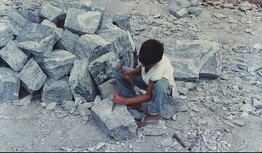
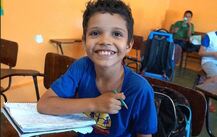
Through education ICEC hopes to improve the conditions of very poor children in deprived areas. By offering children a chance to complete their education ICEC is taking an active role in the combat of child labor and child exploitation.
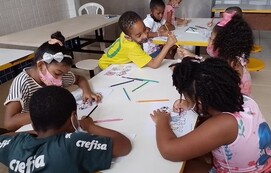
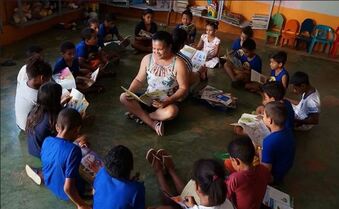
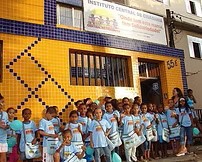
The project Pé na Escola (Feet in school) was set up to this aim. The idea is to register and keep in school children between the ages of five and twelve. In this project pupils are guaranteed to be involved in educational activities after school thus keeping them off the streets and providing them with the opportunity to create a better life. This program works actively with the parents. The parents receive material aide in the form of non-perishable food. In return the parents have to ensure that the children maintain a school attendance record of at least 90%.
The project Pé na Escola has been running successfully in cities such as Duque de Caxias (Rio de Janeiro), Salvador, Feira de Santana, Camaçari and Central (a city in the centre of Bahia state).
Professional Education
In Brazil as in the rest of the world unemployment poses a big challenge. Because of Globalization combined with automation and mechanization it is getting progressively harder for citizens who lack qualifications to find work.
Besides assisting with formal education another focus of ICEC is to offer free professional courses to the parents of the children registered on the Pé na Escola program. This provides the parents with the skills to generate income thus improving their overall living conditions. To aid social inclusion courses and activities on arts, culture and sport are also provided.
Currently hundreds of people are participating in courses and professional training in computer science, craftwork and gastronomy. |